Table of Contents
What is the organizational context in ISO 9001?
Clause 4 of ISO 9001 asks your company to know itself before designing any quality process. It is not corporate philosophy: it is a concrete requirement that answers a simple question – in what environment does your company operate and who has a stake in what you do? The standard starts from a clear logic: a QMS designed without understanding the business context is like building a house without knowing the ground. It may hold up for a while, but at the first audit – or the first operational crisis – the cracks appear. Clause 4 is divided into four sub-clauses:| Sub-clause | What it asks for |
|---|---|
| 4.1 | Identify relevant internal and external factors |
| 4.2 | Determine stakeholders and their requirements |
| 4.3 | Define the scope of the QMS |
| 4.4 | Establish, implement and improve QMS processes |
Clause 4.1: how to identify internal and external factors
This sub-clause asks your company to identify the environmental factors that may affect – positively or negatively – its ability to achieve the expected results of the QMS. In practice, the most commonly used tool for this is the SWOT analysis applied to the QMS (or PESTEL for the external environment). Typical external factors in SMEs:- Regulatory changes in the sector (new sanitary, environmental, customs regulations).
- Competitor behavior and market trends
- Economic conditions affecting suppliers or customers
- Technological changes relevant to your production processes.
- Organizational culture and team maturity level.
- Available infrastructure (machinery, systems, facilities)
- Staff skills and turnover
- Historical performance of the QMS (if existing)
Practical note: You don’t need a 20-page document. A clear table identifying the factor, its nature (internal/external), its potential impact on the QMS and the frequency of review is sufficient.
Clause 4.2: QMS stakeholders and their requirements
Stakeholders are all individuals, groups or organizations that may affect or be affected by your QMS. Clause 4.2 asks you to identify them and determine which of their requirements are relevant to your system. This goes far beyond “our customers want quality”. The standard expects you to be specific. Common stakeholders in SMEs and their typical requirements:- Customers: on-time deliveries, compliant products, traceability, certification as a condition of purchase.
- Key suppliers: payment times, clear technical specifications, stability of purchase volume.
- Employees: safe working conditions, training, clarity of procedures.
- Regulatory agencies: compliance with sectoral regulations (HACCP, NOM, FDA, CE as appropriate).
- Shareholders or management: profitability, operational efficiency, reputation.
Clause 4.3: Defining the scope of the QMS
The scope is the formal statement of which parts of the organization, which products or services and which locations are covered by the QMS. It is not optional or decorative: it is the legal and technical boundary of your certification. To define it correctly you should consider:- The internal and external factors identified in 4.1.
- The requirements of the interested parties identified in 4.2
- The organization’s products and services
Clause 4.4: QMS and its processes
Subclause 4.4 closes the circle: once you know your context, your stakeholders and your scope, you must establish, implement, maintain and continually improve the QMS and its interrelated processes. This implies, for each relevant process:- Defining inputs and expected outputs
- Determining the sequence and interaction between processes
- Identifying the necessary resources
- Assigning responsibilities
- Identify associated risks and opportunities (direct link to clause 6.1)
- Establish evaluation and measurement criteria
Common errors in clause 4 and how to avoid them
 After working with dozens of SMEs undergoing certification, these are the most frequently repeated mistakes:
Copying the context analysis from a generic template 2.
The result is a document that does not describe your company. The auditor detects this in the first few questions. The analysis should reflect your industry, your size, your location and your real customers.
Failure to update the context when the environment changes
A 2019 analysis does not describe the 2024 environment. Regulatory changes, the entry of new competitors or the loss of a key customer should trigger a review of the context.
3. Listing stakeholders without analyzing their requirements.
“Customers” is not enough. The auditor will ask what specific requirements they have and how they are incorporated into the QMS.
4. Defining a scope that is too broad or too restrictive
Broad: include areas that you cannot control and that will generate nonconformities. Restrictive: excludes processes that clearly impact product quality.
5. Treat clause 4 as an initial step.
It is the strategic basis of the QMS. If the context changes and it is not updated, everything that is built on this basis starts to become misaligned: objectives, risks, resources, indicators.
After working with dozens of SMEs undergoing certification, these are the most frequently repeated mistakes:
Copying the context analysis from a generic template 2.
The result is a document that does not describe your company. The auditor detects this in the first few questions. The analysis should reflect your industry, your size, your location and your real customers.
Failure to update the context when the environment changes
A 2019 analysis does not describe the 2024 environment. Regulatory changes, the entry of new competitors or the loss of a key customer should trigger a review of the context.
3. Listing stakeholders without analyzing their requirements.
“Customers” is not enough. The auditor will ask what specific requirements they have and how they are incorporated into the QMS.
4. Defining a scope that is too broad or too restrictive
Broad: include areas that you cannot control and that will generate nonconformities. Restrictive: excludes processes that clearly impact product quality.
5. Treat clause 4 as an initial step.
It is the strategic basis of the QMS. If the context changes and it is not updated, everything that is built on this basis starts to become misaligned: objectives, risks, resources, indicators.
Frequently Asked Questions
Does clause 4 of ISO 9001 require a specific document? No. The standard does not require a specific format. It does require that the information be available as documented evidence. It can be a table, a report, a presentation or a record in your management system – the important thing is that it is up to date and accessible to the auditor. Is a SWOT analysis mandatory to comply with clause 4.1? It is not the only valid tool, but it is the most widely used and accepted. PESTEL, risk-opportunity matrices or gap analysis are also applied. What the standard requires is that the result – the identification of relevant factors – is documented and consistent with your QMS. How often should I review the context of the organization? The standard does not establish a minimum frequency, but the recommended practice is to review it at least once a year (typically during the management review) and extraordinarily in the event of significant changes: new market, regulatory change, merger, loss of major customer. Should stakeholders include employees? Yes. Employees are an internal stakeholder whose requirements – working conditions, training, clear communication – directly impact the ability of the QMS to function. Ignoring them is one of the most common mistakes in defining context. What is the difference between QMS scope and certification scope? They are related but distinct concepts. The scope of the QMS (clause 4.3) defines what processes and areas your system manages. The scope of certification is what the certification body formally validates. In most cases they coincide, but a company may have a QMS that is broader than the certified scope (e.g. certifying only one production line).Organize your context without relying on spreadsheets
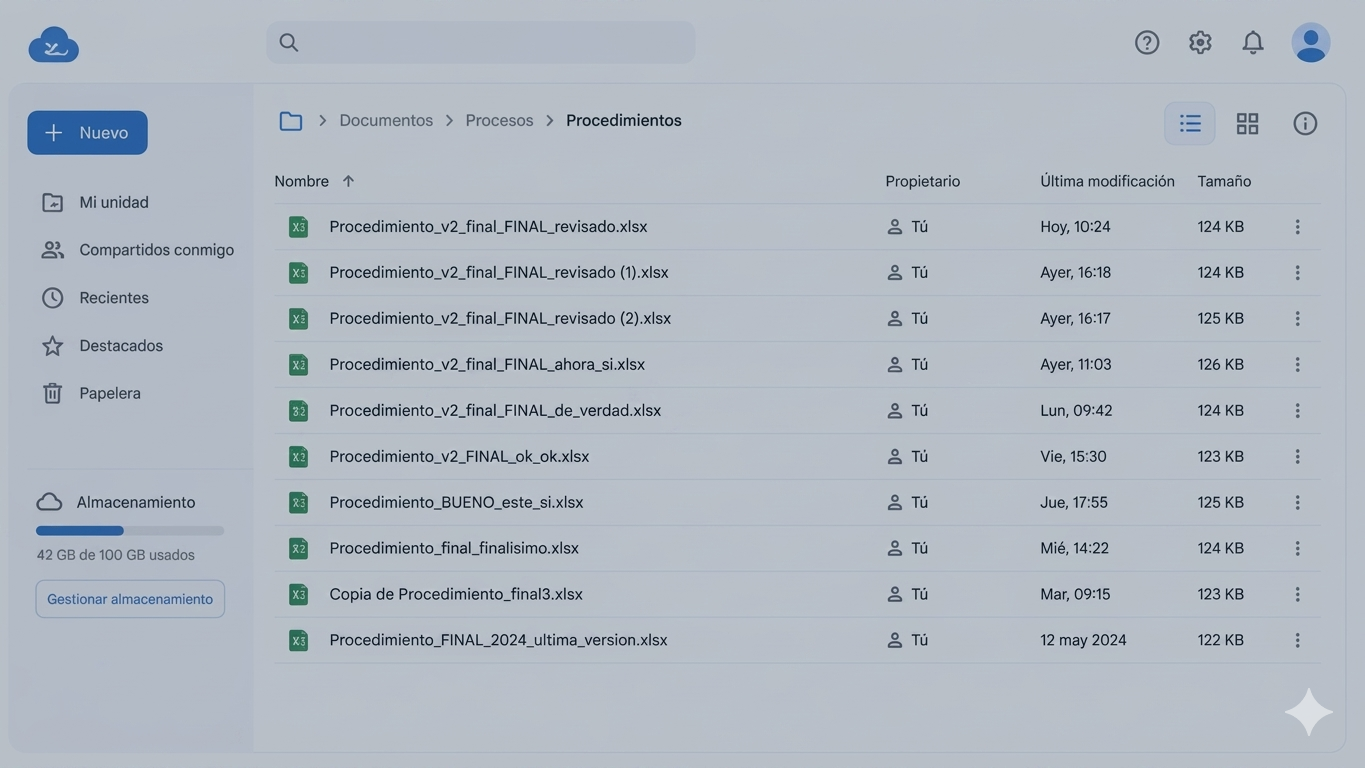
Documenting the organization’s context in Excel or Google Drive works at first. The problem comes when you have to update the analysis, cross-reference it with the risks in clause 6.1 or present it in an orderly fashion to an auditor. The Organization Context module gives you a structured space to record internal and external factors, stakeholders and the scope of the QMS – all in one place, with change history and without depending on who keeps the most up-to-date file.💡 You might also like: How does management software help to comply with ISO 9001?